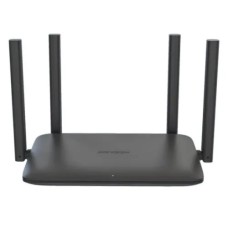
Networking
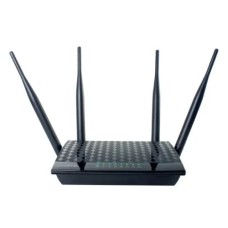
- Antenna: 4 high gain antennas
- Data Rate: 5GHz: 1201Mbps, 2.4GHz: 300Mbps
- Frequency: Dual Band (2.4 GHz, 5 GHz)
- Ports: 1x Gb Adaptive WAN, 3x Gb Adaptive LAN
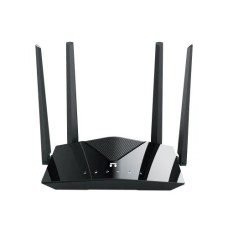
- Four 5-dBi Amplified Antennas
- Data Rate: 2.4 GHz: 300 Mbps, 5 GHz: 867 Mbps
- Frequency: Dual Band (2.4 GHz, 5 GHz)
- Ports: 1x 10/100Mbps WAN, 3x 10/100Mbps LAN
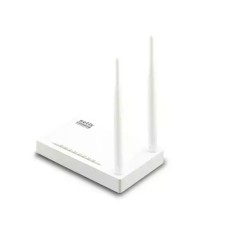
- Data Transfer Rate: Up to 300Mbps
- Interface: 1 WAN and 4 LAN
- Antennas: 2* 5dB
- Frequency: 2.4-2.4835GHz
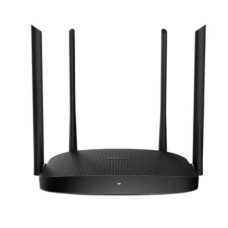
- Antenna: 4x Fixed High-Performance Antennas
- Signal Rate: Up to 300Mbps 2.4GHz & 1201Mbps 5GHz
- OFDMA+MU-MIMO, Easy-Mesh, Area Coverage Up to 2000-2500sqft
- Interface: 1x Gigabit WAN, 3x Gigabit LAN ports
- Antenna: 4* Fixed High-Performance Antennas
- Signal Rate: Up to 300Mbps 2.4GHz & 867Mbps 5GHz
- MU-MIMO, Beamforming Technology, EASY MESH
- Interface: 1x Gigabit WAN, 3x Gigabit LAN ports
- Number of Antenna: 4 x 5dBi
- MU-MIMO Technology Supported
- Data Rate: 2.4GHz: Up to 300Mbps, 5GHz: Up to 867Mbps
- Number of Ports: WAN x 1, LAN x 4
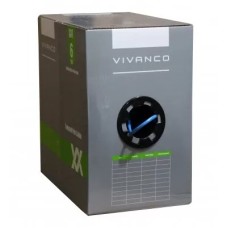
- Type - Network Cable
- Length - 305 Meter
- Cable Shielding - U/FTP
- Jacket Material - PVC
- Conductor Material: CCA
- Conductor Diameter: 0.57 ± 0.01 mm, 23AWG
- Sheath Material: PVC
- Cable Length: 305 ± 1.5 Meter
- Internal Cache 2.75 Mbits
- Switching Capacity 8.8 Gbps
- Packet Forwarding Rate 6.547 Mpps
- High Priority Ports Ports 1 to 8
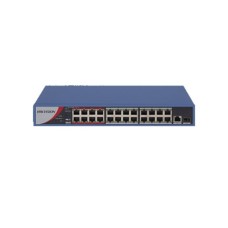
- Ports: 16 × 100 Mbps PoE ports, 1 × RJ45 port , 1 × SFP Port
- Port Type: RJ45, full duplex, MDI/MDI-X adaptive
- Standard: IEEE 802.3, IEEE 802.3u, IEEE 802.3x
- Switching Capacity 7.2 Gbps, MAC address table: 4K
- Port Number: 8 × 100 Mbps PoE, 1 × 100 Mbps Ethernet
- Port Type: RJ45, full duplex, MDI/MDI-X adaptive
- Switching Capacity: 1.8 Gbps
- Packet Forwarding Rate: 1.339 Mpps
- Port Number: 4 100 Mbps PoE, 1 100 Mbps Ethernet
- Port Type: RJ45 , full duplex, MDI/MDI-X adaptive
- Switching Capacity: 1 Gbps
- MAC Address Table: 1 K
- MAC Address: Table 2 K
- Switching Capacity: 1.6 Gbps
- Packet Forwarding Rate: 1.19 Mpps
- Internal Cache: 768 Kbits
- Type - Network Switch
- Number of Total Port - 6
- PoE - Yes
- Manageability - Unmanaged
- Antenna: 4* Fixed High-Performance Antennas
- Signal Rate: Up to 300Mbps 2.4GHz & 867Mbps 5GHz
- MU-MIMO, Beamforming Technology, EASY MESH
- Interface: 1x Fast WAN, 3x Fast LAN ports
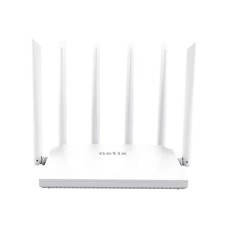
- Antenna: 6* External Fixed 5dBi Antenna
- Signal Rate: Up to 300Mbps 2.4GHz & 867Mbps 5GHz
- MU-MIMO, Beamforming Technology, EASY MESH
- Interface: 1x Gigabit WAN, 3x Gigabit LAN ports
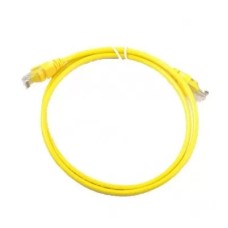
- Supports network speeds up to 1Gbps
- LSZH outer sheath
- Snagless boot design
- High-speed Gigabit data transmission
- Unshielded twisted pair design
- Durable PVC outer jacket
- 3 meter flexible length cable
- Durable length markings to reduce waste of cable
- Cross filler inside to offer better NEXT and ANEXT performance
- Frequency 1-250MHz, extended to 550MHz
Why Networking Products Matter for Internet Connectivity in Bangladesh
Every connected device in Bangladesh — from smartphones and laptops to IP cameras and POS terminals — relies on networking hardware to send and receive data. The router distributes your internet connection, the switch links your wired devices, the access point blankets your space with Wi-Fi, and the cables tie it all together. Without the right networking products, even a premium internet subscription from any Bangladeshi ISP delivers a frustrating experience filled with buffering, dropped connections, and dead zones.
The networking product market in Bangladesh has matured significantly. Prices now range from as low as BDT 17 for a basic RJ45 connector to over BDT 290,000 for enterprise-grade Layer 3 managed switches. With hundreds of products across dozens of subcategories, finding the right device at the right price requires a structured approach — and that is exactly what this page provides.
Here you can browse high-speed Wifi Routers for your home or office, compare PoE switches built for CCTV installations, check real-time pricing on structured cabling components, and place your order with confidence knowing every product is genuine. We stock networking equipment from all global brands in Bangladesh — TP-Link, MikroTik, Cisco, D-Link, Tenda, Netgear, Cudy, Asus, BDCOM, Hikvision, Dahua, Grandstream, Zyxel, and beyond — all backed by official manufacturer warranty.
Networking Product and Price Ranges in Bangladesh 2026
The networking ecosystem is made up of distinct product categories, each serving a specific function within a network architecture. Understanding these categories helps you buy only what you actually need and avoid paying for features that do not apply to your setup.
Wireless Internet Distribution for Home and Office
The Wi-Fi router is the most commonly purchased networking product in Bangladesh. It serves as the central hub that receives your internet connection from the ISP modem or ONT and distributes it wirelessly and through ethernet ports to every device on your local network.
Router pricing in Bangladesh starts at approximately BDT 850 for entry-level single-band Wireless N (802.11n) models and extends beyond BDT 50,000 for high-end tri-band mesh systems and gaming routers with Wi-Fi 6E support. The current mainstream sweet spot for most buyers sits between BDT 3,000 and BDT 8,000, where you get dual-band Wi-Fi 6 (802.11ax) routers with gigabit ethernet ports, MU-MIMO, OFDMA, and app-based management.
TP-Link dominates this segment with the Archer AX series for standalone routers and the Deco series for whole-home mesh coverage. MikroTik routers serve a different audience — ISPs and network engineers who need RouterOS-level control over bandwidth management, firewall rules, VPN tunneling, and dynamic routing protocols. Cudy and Tenda have emerged as strong budget contenders, offering Wi-Fi 6 routers under BDT 3,000 that handle basic household needs comfortably.
Wired LAN Connectivity for Multiple Devices
A network switch is the device that expands your wired network beyond the limited ethernet ports on your router. It connects computers, printers, NVRs, access points, and servers within a local area network and allows them to communicate at full gigabit or even 10-gigabit speeds without the latency and interference issues that wireless connections introduce.
Switch prices in Bangladesh cover an enormous range depending on port count, management capability, PoE support, and switching layer.
|
Switch Category |
Port Count |
Price Range (BDT) |
Primary Use Case |
|
Unmanaged Desktop Switch |
5 to 8 ports |
650 – 3,000 |
Home network, small office |
|
Gigabit Unmanaged Switch |
8 to 16 ports |
3,000 – 8,000 |
Medium office, gaming LAN |
|
Managed Smart Switch |
16 to 24 ports |
8,000 – 30,000 |
Business LAN with VLAN and QoS |
|
PoE Network Switch |
4 to 24 ports |
2,500 – 120,000 |
IP cameras, access points, VoIP |
|
Layer 3 Enterprise Switch |
24 to 48 ports |
30,000 – 290,000 |
Data center, ISP backbone |
PoE switches have become particularly important in Bangladesh due to the rapid growth of IP surveillance. A PoE switch delivers both data and electrical power through a single ethernet cable, eliminating the need for separate power adapters at each camera or access point location. Hikvision and Dahua offer PoE switches purpose-built for surveillance networks, while TP-Link and MikroTik provide general-purpose PoE options for mixed environments.
Upgrade your office with a reliable Network Switch that matches your current device count and leaves room for future expansion — buying a switch with a few extra ports now saves you from replacing it six months later.
Extended Wi-Fi Coverage Without Signal Loss
A wireless access point connects to your network switch or router through an ethernet cable and broadcasts a Wi-Fi signal to nearby devices. Unlike a range extender that rebroadcasts a degraded wireless signal, an access point maintains full network speed because its backhaul connection is wired.
Access point pricing in Bangladesh starts from around BDT 2,500 for indoor ceiling-mount units from TP-Link and Tenda and climbs to BDT 40,000 or more for high-capacity outdoor models from Cambium, Cisco, and MikroTik. These devices are essential in office buildings, hotels, restaurants, universities, and large residences where a single router cannot provide consistent coverage across the entire space.
Wi-Fi Range Extender For Affordable Dead Zone Coverage
Range extenders sit at the budget end of the wireless coverage spectrum. Priced between BDT 1,000 and BDT 5,000 in Bangladesh, they capture your existing router's Wi-Fi signal and rebroadcast it to reach areas with weak connectivity. They work best for solving a single dead zone in a home environment. For multi-room or multi-floor coverage needs, a mesh router system or wired access points deliver a significantly better experience.
UTP Cable, Patch Cord, and Structured Cabling Accessories
Every wired network connection depends on physical cabling. UTP (Unshielded Twisted Pair) LAN cable is the standard medium for ethernet connections in homes, offices, and data centers across Bangladesh.
Cat5e cable supports gigabit speeds over short distances and costs approximately BDT 8 to BDT 15 per meter. Cat6 cable is the current recommended standard, offering better shielding against crosstalk and more reliable gigabit performance over longer runs at BDT 15 to BDT 30 per meter. Buying in 305-meter boxes from brands like Belden and Cote provides better per-meter pricing for larger installations.
Beyond the cable itself, a complete structured cabling setup requires RJ45 connectors (BDT 3 to BDT 30 each), pre-made patch cords for connecting devices to wall outlets, patch panels for organizing cable terminations in a rack, faceplates for clean wall-mounted ethernet ports, and cable management accessories like wire managers and rack trays.
Buy reliable UTP Cable & Accessories from certified brands to ensure your physical network infrastructure delivers the full speed and stability your routers and switches are capable of.
Fiber Optic Equipment and OLT, ONU, SFP Module
The fiber optic networking segment has grown rapidly in Bangladesh as ISPs transition from copper-based last-mile connections to fiber-to-the-home (FTTH) architecture using GPON and EPON standards.
OLT (Optical Line Terminal) devices sit at the ISP's central office and manage fiber connections to hundreds or thousands of subscribers. Pricing ranges from BDT 50,000 for compact units to over BDT 200,000 for high-density chassis models from BDCOM, V-SOL, and Huawei. At the subscriber end, ONU (Optical Network Unit) devices convert the fiber signal to ethernet and typically cost between BDT 1,500 and BDT 5,000.
Supporting fiber products include SFP and SFP+ transceiver modules for connecting switches and routers to fiber links, media converters for fiber-to-ethernet translation, fiber patch cords in SC, LC, and FC connector types, PLC splitters for distributing a single fiber strand to multiple subscribers, and splice closures for protecting fiber joints in outdoor environments.
Shop Fiber Optic Cable & Accessories online to source the exact connector types, fiber grades, and transceiver wavelengths your deployment requires — whether you are an ISP expanding coverage or a business connecting to a fiber backbone.
Crimping, Testing, Splicing, and Installation Equipment
Professional network installation and maintenance requires specialized tools. This subcategory covers crimping tools for terminating RJ45 connectors onto UTP cable, cable testers for verifying continuity and wiring correctness, punch-down tools for patch panel termination, and fiber splicer machines for fusing fiber optic strands with precision.
Pricing spans from BDT 100 for a basic punch-down tool to BDT 30,000 or more for a professional-grade fusion splicer. Network racks, rack shelves, PDUs (power distribution units), and cooling fans round out the infrastructure accessories needed for any properly built server room or network closet.
TP-Link vs MikroTik vs Cisco vs D-Link in Bangladesh
Brand selection shapes your entire networking experience — from initial setup complexity to long-term reliability and support availability. Here is how the most widely sold networking brands in Bangladesh compare across the factors that matter most.
|
Brand |
Target User |
Price Tier |
Key Strength |
Limitation |
|
TP-Link |
Home users, SMBs |
Budget to mid-range |
Easiest setup, widest retail availability |
Limited enterprise features |
|
MikroTik |
ISPs, network engineers |
Mid-range |
RouterOS depth, unmatched configurability |
Steep learning curve for beginners |
|
Cisco |
Enterprise, data centers |
Premium |
Global standard, Layer 3 switching, TAC support |
Expensive, licensing complexity |
|
D-Link |
Home, basic office |
Budget |
Affordable, simple |
Smaller product ecosystem than TP-Link |
|
Tenda |
Budget-first buyers |
Entry-level |
Lowest prices in most categories |
Basic feature sets, limited support |
|
Netgear |
Prosumers, gamers |
Mid to premium |
Nighthawk gaming line, strong Wi-Fi |
Less popular in BD retail channels |
|
Cudy |
Value seekers |
Budget to mid |
Aggressive Wi-Fi 6 pricing |
Newer brand, less proven long-term |
|
BDCOM |
ISPs, fiber networks |
Mid-range |
OLT/ONU specialization, strong BD presence |
Narrow product focus |
|
Hikvision/Dahua |
CCTV installers |
Mid-range |
PoE switches built for surveillance |
Not general-purpose networking |
TP-Link remains the default recommendation for most Bangladeshi buyers who want reliable performance without complexity. MikroTik is the professional's choice — if you know how to use RouterOS, no other brand in this price range gives you the same level of control. Cisco is the enterprise standard worldwide and the right choice when budget is secondary to uptime, security certification, and global support infrastructure.
Choosing the Right Networking Product Based on Your Setup Requirements
Networking products are not one-size-fits-all. A device that serves a home perfectly may choke under office workloads, and enterprise gear is overkill and unnecessarily complex for residential use. Here is how to match products to your actual environment.
Router, Switch, and Extender for Residential Use
Most Bangladeshi homes need a dual-band Wi-Fi 6 router in the BDT 3,000 to BDT 6,000 range. This handles streaming, video calls, online classes, and casual gaming across 8 to 15 devices simultaneously. For homes larger than 1,500 square feet or with multiple floors, a 2-pack or 3-pack mesh system like the TP-Link Deco X10 or Deco X50 provides seamless roaming coverage. A 5 or 8 port gigabit switch adds wired stability for desktop PCs, smart TVs, and gaming consoles. A single range extender between BDT 1,000 and BDT 2,000 fixes an isolated dead zone without the cost of a full mesh upgrade.
Office and Small Business Network Managed Infrastructure for Productivity
A professional office network requires managed switches with VLAN segmentation to separate departmental traffic, business-grade ceiling-mount access points that handle 30 to 50 concurrent wireless clients without performance drops, and a router with VPN and firewall capabilities for secure remote access. Structured cabling using Cat6 cable, properly terminated on patch panels inside a wall-mounted or floor-standing network rack, keeps the infrastructure organized, labeled, and easy to troubleshoot.
Find essential Networking Accessories including patch cords, faceplates, cable managers, rack trays, and PDUs to build out your office network infrastructure completely. Skipping these items during initial setup inevitably leads to cable chaos and maintenance headaches within months.
ISP and Enterprise Network For Scalable, Carrier-Grade Deployment
ISPs and enterprises need carrier-grade hardware designed for continuous operation under heavy loads. MikroTik Cloud Core Routers handle bandwidth shaping and subscriber management for hundreds of connections. Cisco Catalyst and Juniper switches provide the Layer 3 routing, redundancy, and monitoring capabilities that mission-critical networks demand. Fiber deployments require GPON OLT equipment, splitters, ONU devices, and professional testing and splicing tools.
Buy professional-grade Networking Tools — including fusion splicers, OTDR testers, and cable certification kits — to ensure every fiber joint, cable run, and connector termination meets the standards your subscribers and users depend on.
Technical Specifications to Evaluate Before Every Purchase
Speed rating should be gigabit (1000 Mbps) minimum for any router or switch purchased in 2026 — Fast Ethernet (100 Mbps) is obsolete for most purposes. Port count should accommodate your current devices plus 20 to 30 percent headroom for growth. PoE support is mandatory if you are powering IP cameras or access points through the cable. Wi-Fi standard matters — Wi-Fi 6 (802.11ax) is the current generation and delivers measurably better performance than Wi-Fi 5 in multi-device environments. Managed versus unmanaged is a control and visibility decision — managed switches add VLAN, QoS, SNMP monitoring, and remote management but cost more. Warranty duration ranges from one to three years by brand and should factor into your total cost comparison.
Buy Genuine Networking Products at Best Price with Warranty and Doorstep Delivery in Bangladesh
Price matters, but authenticity matters more. Counterfeit networking products circulate in the Bangladeshi market, especially for high-demand brands like TP-Link and MikroTik. If you want to avoid these risks, make sure to buy from the Best Shop For Networking Products. Fake products may look identical but use inferior components that fail under load, overheat in Bangladesh's humid climate, and carry no valid warranty.
Every product on this page is sourced directly from authorized brand distributors. You receive factory-sealed, genuine hardware with an official manufacturer warranty card and a verifiable serial number. Our pricing reflects current market rates and is updated frequently. EMI options are available on eligible purchases for buyers investing in higher-end enterprise equipment.
Take advantage of the Online Delivery Service of Index It to receive your networking products at your doorstep anywhere in Bangladesh — Dhaka, Chittagong, Sylhet, Rajshahi, Khulna, Rangpur, or any upazila. Every order is processed promptly, packed securely against transit damage, and shipped with real-time tracking.
Frequently Asked Questions
What is the lowest price for networking products in Bangladesh?
Small accessories like RJ45 connectors start from BDT 17. Functional devices like routers begin around BDT 850 and switches from BDT 650.
Which router brand is most popular for home Wi-Fi in Bangladesh?
TP-Link. It offers the widest range of home routers with easy app-based setup, reliable performance, and strong after-sales support between BDT 2,000 and BDT 10,000.
What does a managed switch do that an unmanaged switch cannot?
A managed switch gives you control over VLANs, QoS traffic prioritization, port mirroring, IGMP snooping, and remote monitoring. An unmanaged switch simply forwards data with no configuration options.
How much does a PoE switch cost in Bangladesh?
Basic 4-port PoE switches start from BDT 2,500. Enterprise 24-port PoE+ models can cost up to BDT 120,000 depending on brand and total power budget.
What equipment do I need for an IP camera CCTV setup?
A PoE switch with enough ports for your cameras, Cat5e or Cat6 cable, RJ45 connectors, and an NVR connected to the same switch. Runs exceeding 100 meters need media converters or fiber links.
Is upgrading to a Wi-Fi 6 router worth it in 2026?
Yes. Wi-Fi 6 routers now cost only slightly more than Wi-Fi 5 models while offering faster speeds, better multi-device performance, and improved range. The upgrade pays for itself in any home with 10 or more connected devices.
What is the typical price for a 24-port managed switch in Bangladesh?
Between BDT 12,000 and BDT 30,000 for a gigabit managed model. Unmanaged 24-port switches start around BDT 6,000. PoE capability adds BDT 5,000 to BDT 20,000 to the price.
Should I buy a mesh router or a range extender for better coverage?
A mesh system creates one seamless network with automatic device handoff between units — ideal for multi-room or multi-floor spaces. A range extender is cheaper but creates a separate, slower network. Mesh is the better long-term investment.
What is an OLT device and do home users need one?
No. An OLT (Optical Line Terminal) is ISP infrastructure that manages fiber connections to many subscribers. It costs BDT 50,000 to BDT 200,000+ and is only relevant for internet service providers.
Which is better for new cable installations — Cat5e or Cat6?
Cat6. It costs only BDT 7 to BDT 15 more per meter than Cat5e but delivers better shielding, more reliable gigabit performance over longer runs, and future-proofs your cabling investment.
Do all networking products sold in Bangladesh include warranty?
Genuine products from authorized sellers include manufacturer warranty, typically one to three years depending on brand and product type. Always check for a valid warranty card and serial number before purchasing.
What is the best gaming router available in Bangladesh?
Asus RT-AX series and TP-Link Archer AX73 are the most popular gaming routers, priced between BDT 8,000 and BDT 25,000. Both offer Wi-Fi 6, QoS game prioritization, and low-latency performance. A wired connection through a gigabit switch still delivers the absolute lowest ping.
When should I choose an access point over a range extender?
Choose an access point whenever you can run an ethernet cable to the area needing coverage. It maintains full network speed with zero signal degradation. Use a range extender only when running cable is physically impractical.
What does a basic small office network in Dhaka cost to set up?
A complete setup with a Wi-Fi 6 router, ceiling-mount access point, 16 or 24 port managed switch, Cat6 cabling, patch panel, and wall-mounted rack costs approximately BDT 25,000 to BDT 60,000 excluding installation labor.
Are MikroTik routers good for home users in Bangladesh?
MikroTik hardware is excellent, but its RouterOS interface requires networking knowledge to configure properly. Home users who want simple app-based setup are better served by TP-Link, Cudy, or Tenda routers.